When Students Stop Trusting the System, Democracy Has Already Lost
The CJP protests raise a deeper question than any single exam or government decision: whether young people still trust the institutions that shape their future.
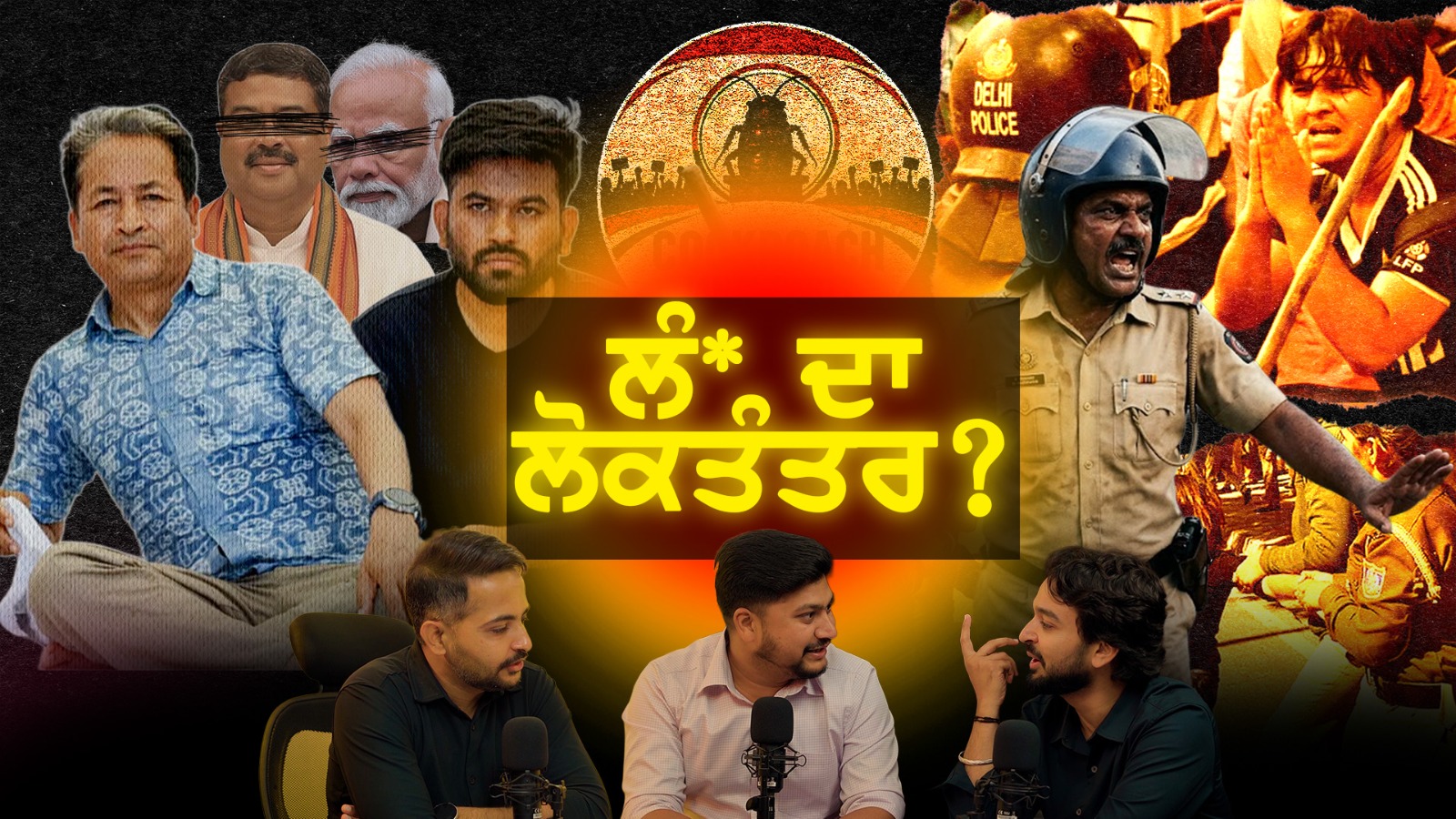
There are moments in a country's history when the issue is no longer about a protest, an exam, or a government decision. It becomes about trust.
The ongoing CJP protests are one of those moments.
At first glance, people may see students on the streets, police deployment, slogans, barricades, and clashes. But beneath all of that lies a much bigger question:
Do young people still trust the institutions that decide their future?
That is the real issue.
A student's greatest asset is not money. It is hope. Every examination represents years of preparation, sacrifices made by parents, sleepless nights, coaching fees, and dreams built over decades. When questions arise about the fairness of that system, people don't just lose confidence in an exam—they lose confidence in the idea that hard work will be rewarded.
And that is dangerous.
History has repeatedly shown that young people don't suddenly appear on the streets for entertainment. Most students would rather be studying, spending time with friends, or planning their careers. Protests are rarely the first choice. They usually become the last one.
This is why governments must understand something very simple.
Every protest has two possible endings.
One is dialogue.
The other is escalation.
The choice often belongs to those in power.
When citizens begin asking questions, the strongest governments don't respond with louder voices—they respond with better answers.
If people believe mistakes have been made, transparency becomes more valuable than public relations.
Silence creates rumours.
Rumours create anger.
Anger creates protests.
And protests eventually become political movements.
This pattern repeats itself across the world.
Another disturbing aspect of recent events has been the images of confrontations between protesters and police.
Police officers have one of the most difficult jobs in any democracy. They are expected to maintain law and order, protect public property, and prevent violence. But democracies also expect restraint.
Whenever police and students stand on opposite sides of barricades, nobody truly wins.
Every baton raised against a student becomes a symbol that lives far longer than the actual protest.
At the same time, peaceful protest also carries responsibilities.
Public property should not become collateral damage.
Violence against police officers cannot be justified simply because emotions are running high.
Democracy works only when both citizens and governments respect its boundaries.
One side cannot demand accountability while abandoning responsibility.
The other cannot demand peace while refusing dialogue.
Perhaps the saddest part of modern politics is how quickly genuine public concerns become political scorecards.
One side sees only government failures.
The other sees only opposition conspiracies.
Very few people stop to ask whether students themselves are actually being heard.
Their voices often disappear beneath television debates, political speeches, hashtags, and social media battles.
And then there is social media.
Platforms that were supposed to spread information now spread outrage faster than facts.
Within minutes, everyone becomes an expert.
Videos circulate without context.
Half-truths become headlines.
Opinions become facts.
People choose sides before understanding the issue itself.
This culture of instant judgement is making every national issue more complicated than it needs to be.
The CJP protests are a reminder that governance is not just about winning elections.
It is about maintaining public confidence.
When citizens begin questioning institutions, governments should see that as feedback—not hostility.
Ignoring frustration rarely makes it disappear.
It usually allows it to grow.
This discussion is bigger than one protest or one government.
Every government, regardless of political party, eventually faces moments where it must choose between listening and lecturing.
History remembers those choices.
At Saade Aala Radio, we don't believe every protest is automatically right.
Nor do we believe every government decision is automatically wrong.
We believe difficult questions deserve honest answers.
We believe accountability should never depend on political ideology.
We believe students deserve transparency.
We believe institutions become stronger when they are questioned—not weaker.
Most importantly, we believe democracy is healthiest when disagreement is answered with conversation instead of confrontation.
India has one of the youngest populations in the world.
That youth should be spending their energy building businesses, conducting research, creating technology, writing books, discovering medicines, and preparing for the future—not wondering whether the system they depend on is fair.
A nation cannot ask its youth to dream big while giving them reasons to doubt the process.
Governments come and go.
Political parties rise and fall.
But public trust, once broken, takes years to rebuild.
Perhaps that should be the biggest lesson from everything we are witnessing today.
Because in the end, democracy is not measured by how loudly governments speak.
It is measured by how patiently they listen.
— Team Saade Aala Radio